How to Choose a Logistics Operator: Process or Art?
 Piotr Skobało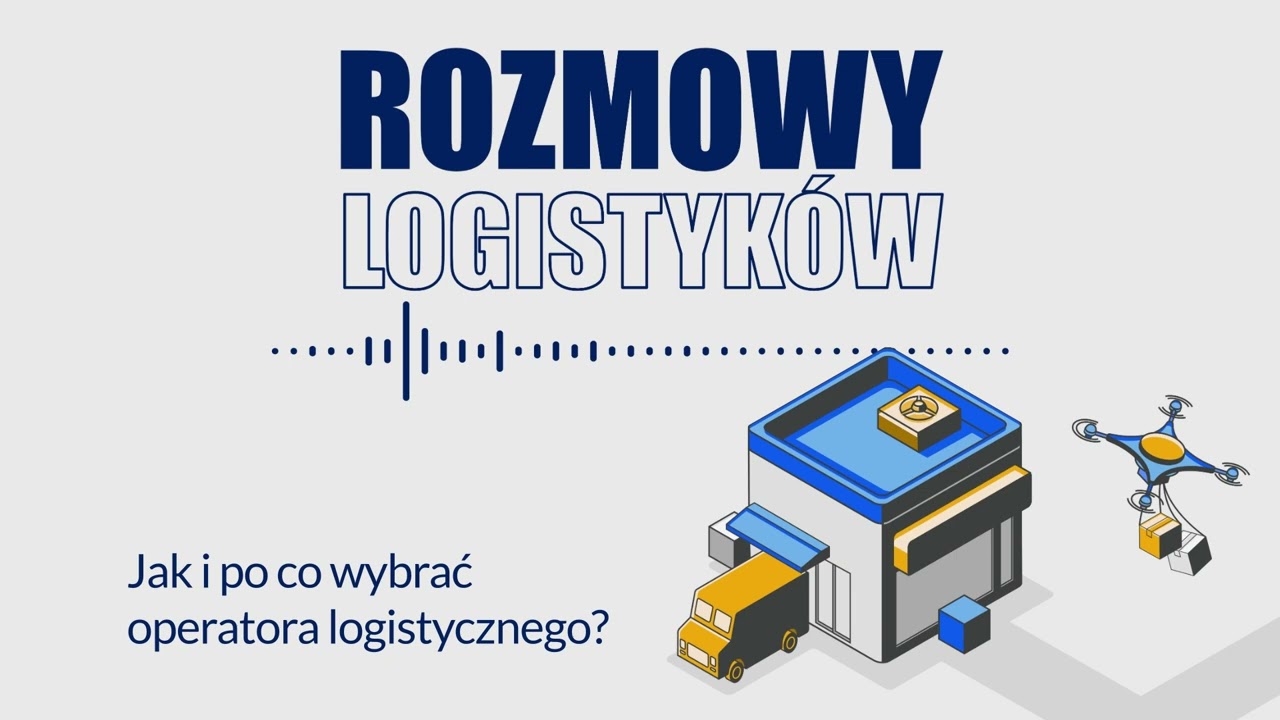
In this episode of Rozmowy Logistyków, Piotr Skobało and Adam Sobolewski discuss how and why to choose a logistics operator. They cover the most common mistakes in selecting a 3PL, and what a well-organized process for finding a partner and negotiating a contract looks like.
CHEAPER ISN'T ALWAYS THE REAL REASON
Logistics operators are happy to sell the "we'll optimize your costs" narrative — but that isn't always true. The real benefits are converting fixed costs into variable ones (you pay for the work the operator actually did, not for empty space and headcount in the off-season) and flexibility and scalability during dynamic growth. For simple operations, without much product diversification or demand spikes, running logistics in-house can make more sense — and even large, mature companies with extensive logistics (like InPost, which after years of building its own operations turned itself into a technology company selling logistics services) don't always do this for the price.
ACCESS TO TECHNOLOGY: OFTEN AN OVERRATED ARGUMENT
An operator will rarely invest in advanced solutions (new racking, sorters worth millions of euros) without a secured long-term contract — with a one-year contract, it's hard to expect dedicated infrastructure. Only large, multi-year contracts (3-5 years) with a dedicated warehouse open up a real possibility of jointly designing technological operational solutions.
FIRST UNDERSTAND YOUR OWN NEEDS, THEN LOOK FOR AN OPERATOR
The starting point is a precise description: order profile (average number of products, weight, parcel size), customer locations and expected delivery time (order cut-off versus fulfillment time), and product specifics requiring special handling (dangerous goods — ADR/hazmat also covers things like pressurized aerosol cosmetics, not just obvious chemical substances). A key honesty principle: inflating volume forecasts in the hope of better rates comes out quickly and generates costs that ultimately fall on the client anyway.
A TWO-STAGE PROCESS: RFI, THEN RFP
The first step is a non-binding Request for Information (RFI) — general questions about specialization and references, ideally checked directly with the operator's own clients (preferably not the ones the operator recommends first — it's worth finding a client who had a real challenge and seeing how the company handled it). Only then comes a detailed Request for Proposal (RFP) with a full description of needs. At the proposal-evaluation stage (typically 3-5 vendors, not 15), it's worth assigning weights to individual criteria (cost, service level, flexibility) and running that discussion with the whole organization — because choosing an operator is a project for the whole company, not just logistics.
FLEXIBILITY COSTS, RIGIDITY DOES TOO
A key trade-off: an operator offering a more optimized cost structure tends to be less flexible about sudden volume spikes, while a pricier service can offer a wider band of daily order variability. This has to be clear to the whole organization — sales or marketing can't assume a fivefold volume spike from a promotion will be fulfilled 100% if the contract doesn't guarantee it. Bonus-malus mechanisms (e.g. a surcharge for on-time performance above 97%, a penalty for dropping below 95%) are an important part of negotiation — contracts squeezed purely on price often end up with low quality that's hard to enforce.
TWO MOST COMMON MISTAKES
First: choosing an operator on the false assumption that "it has to be cheaper" — confusing cost savings with a change of cost model. Second: expecting the operator to always treat your business as a priority over the contract terms, relative to their other clients — if something isn't written into the contract and metrics, it doesn't apply. For large tenders, especially for companies without prior experience, it's worth using outside support — contract matters are complex and it's easy to miss an important clause.
Want to apply this to your supply chain?
Let's talk about the challenges in your organization and find where the biggest potential for EBITDA improvement is.
Get in Touch